
Generative AI: The New Engine of Enterprise Productivity
Published by: The Consultancy World
The AI Foundations Library: Lesson 8 of 8
Executive Summary
The Definition: AI that creates (synthesises) new content rather than just analysing existing data.
The Engine: Powered by Large Language Models (LLMs) that predict the next "token" (word fragment) based on massive statistical patterns.
The 2026 Reality: It is a Co-Pilot, not an Auto-Pilot. It excels at first drafts and brainstorming but requires human verification for 100% factual accuracy.
1. Analysis vs. Creation: The Core Shift
| Feature | Traditional AI (Discriminative) | Generative AI (Creative) |
|---|---|---|
| Primary Goal | To Classify or Predict | To Create or Synthesise |
| Output | A Number, Label, or Category | Text, Image, Code, or Audio |
| Example | "This transaction is fraudulent." | "Write a summary of this meeting." |
CEO Note: Traditional AI is for Logic and Consistency.
Generative AI is for Creativity and Speed.
Use the right tool for the right job.
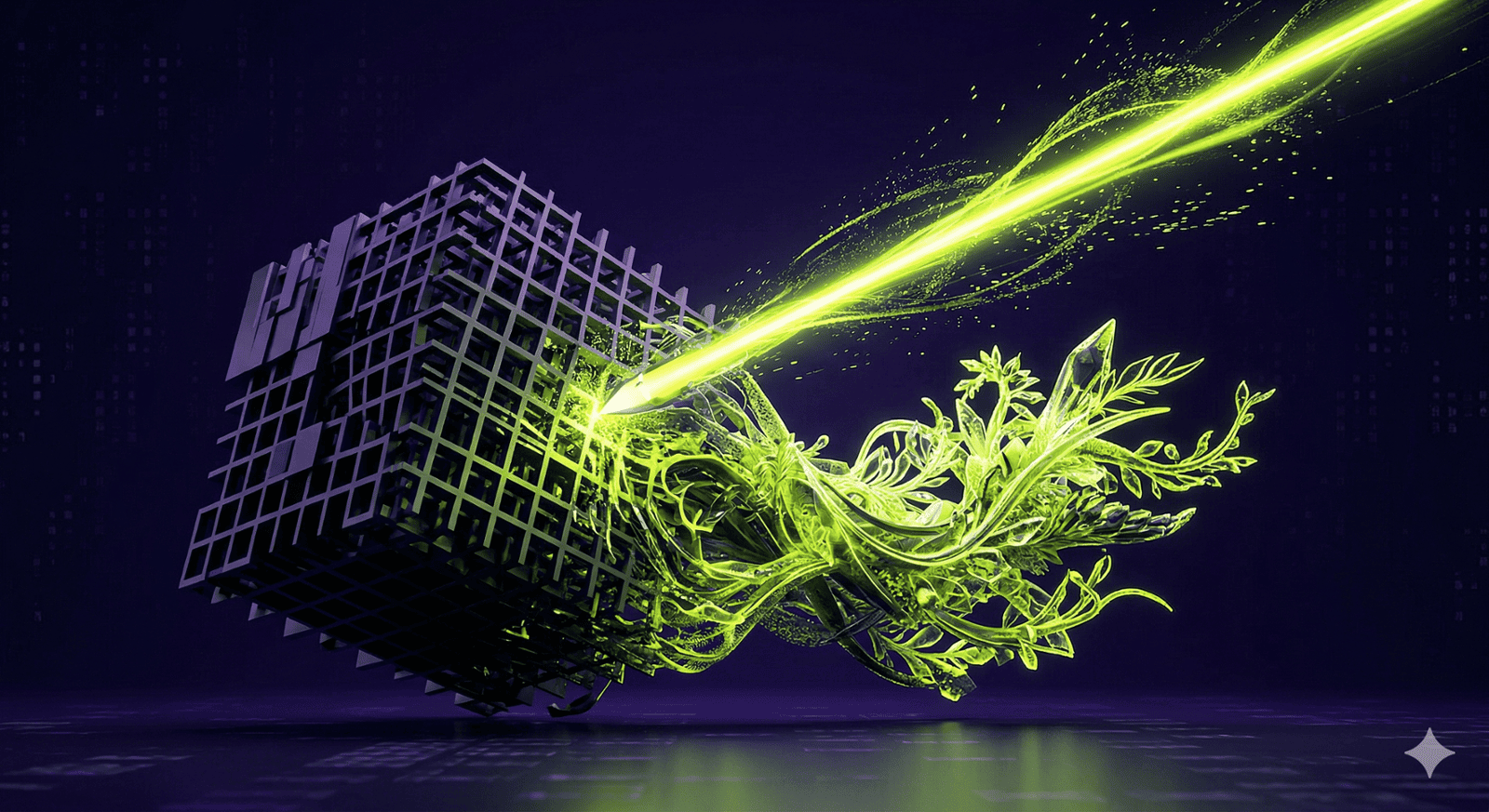
2. How It Actually Works (The Musician Analogy)
Think of an LLM like a musician who has listened to every song ever recorded. They haven't "memorised" the songs; they've learned the patterns of melody and rhythm. When you ask for a "New Jazz Song," they aren't searching a database; they are creating a new melody based on those learned patterns.
Step 1: Pre-training: Reading the internet to learn how language "works."
Step 2: Fine-Tuning: Learning to follow instructions and be helpful.
Step 3: Generation: Predicting the next word in a sequence based on your prompt.
CEO Note: The AI isn't "thinking." It is performing high-speed statistical prediction. This is why it can sound incredibly confident even when it is wrong (Hallucination).
3. The 2026 Use-Cases for Leaders
Generative AI has moved beyond basic chat. In 2026, the value is in:
Summarisation: Turning a 50-page PDF into 5 bullet points in seconds.
Coding: Allowing non-technical teams to build simple internal tools.
Personalisation: Creating 1,000 unique marketing emails based on individual customer data.
4. The "Hallucination" Warning
Because these systems predict the most likely next word, they will sometimes invent facts, citations, or legal cases with absolute confidence.
The Golden Rule: Never publish AI-generated content or use AI-generated figures without Human-in-the-Loop verification.